7 Signs You Need a New Roof in Frederick, MD
Hailstorms, harsh winters and humid summers take a toll on Maryland roofs. Here are the signs it is time to replace yours.

The clearest signs you need a new roof in Frederick, MD are curling or missing shingles, granules collecting in your gutters, daylight or water stains in the attic, a sagging roofline, and an age past 20 years. See any one of these on a roof older than 15 years and replacement usually costs you less than another patch job. Here is what each sign looks like, how to check it yourself, and when to pick up the phone and call a licensed Maryland roofer.
Maryland weather is rough on asphalt shingles. Between winter ice dams, spring hail, and that sticky summer heat, most roofs in Frederick County start to look tired around year 15. The National Roofing Contractors Association (NRCA) puts asphalt shingle life at 15 to 30 years, depending on the grade of shingle and how well the attic breathes. Our local freeze and thaw swings tend to drag most roofs toward the short end of that range. And here is the part homeowners miss: a worn out roof bleeds money into your utility bill long before a single drop ever lands in your attic.
The 7 Warning Signs at a Glance
| Sign | What it means | Urgency |
|---|---|---|
| Curling or cupping shingles | Asphalt has dried out and lost flexibility | High |
| Granules in the gutters | Protective layer is washing away | Medium |
| Daylight through the deck | Active water intrusion path | Urgent |
| Sagging roofline | Wet, rotting decking or structure | Urgent |
| Moss and algae clumps | Trapped moisture rotting the deck | Medium |
| Damaged or missing flashing | Failed seals at chimneys and valleys | High |
| Roof age over 20 years | Past expected service life | High |
1. Curling or Cupping Shingles
Walk around your house and look up. Shingles should lie flat and tight against the deck. If the edges are curling up, or the centers are cupping like a shallow bowl, the asphalt has gone stiff and dried out. Curling shingles stop shedding water the way they should. Wind catches the edge, gets underneath, and rips them clean off in the next storm.
Cupping usually means the attic is not venting right. Heat gets trapped under the deck and slowly bakes the shingles from below. Good ridge and soffit venting is one of the cheapest ways to stretch a roof’s life, and that is exactly why a full replacement that fixes the airflow solves the actual problem, not just the symptom you can see.
2. Granules in Your Gutters
Check your gutters after a heavy rain. If there is a layer of coarse black sand sitting at the bottom, that grit is the granules that used to protect your shingles. A little granule loss in the first month after a new install is normal. On a 15 year old roof, it is not.
Once the granules wash away, the asphalt mat underneath is left bare to the sun. The shingles dry out fast and start to crack. When that happens, the roof has pretty much reached the end of the road.
3. Daylight Through the Roof Deck
Head up to the attic on a sunny afternoon and kill the lights. If you can see pinpoints of daylight poking through the decking, water is already finding its way in. Even tiny gaps are enough to soak the insulation and start mold growing inside your wall cavities.
Bring a flashlight and scan the rafters for dark stains. Those stains map out every leak you never knew you had. The Insurance Information Institute notes that water damage is one of the most common and costly home insurance claims, and most of it traces back to a roof problem the owner never spotted.
4. Sagging Rooflines
Step across the street and sight down the ridge of your roof. It should run dead straight. Any dip, wave, or sag means the decking underneath is wet and rotting away. Sagging is serious. There is hidden structural damage up there, and the roof could give out under the next heavy snow load.
Do not sit on this one. Call a licensed roofer the same week.
5. Moss and Algae Growth
Maryland humidity is a perfect breeding ground for moss. A little green streaking on the north face is just cosmetic. Thick clumps of moss are a different story. Moss traps moisture against the shingles around the clock, and that constant dampness speeds up granule loss and rots the wood deck underneath.
Whatever you do, do not pressure wash it off. That strips the granules and voids most shingle warranties on the spot. Once moss has really dug in, replacement is the honest answer.
6. Damaged or Missing Flashing
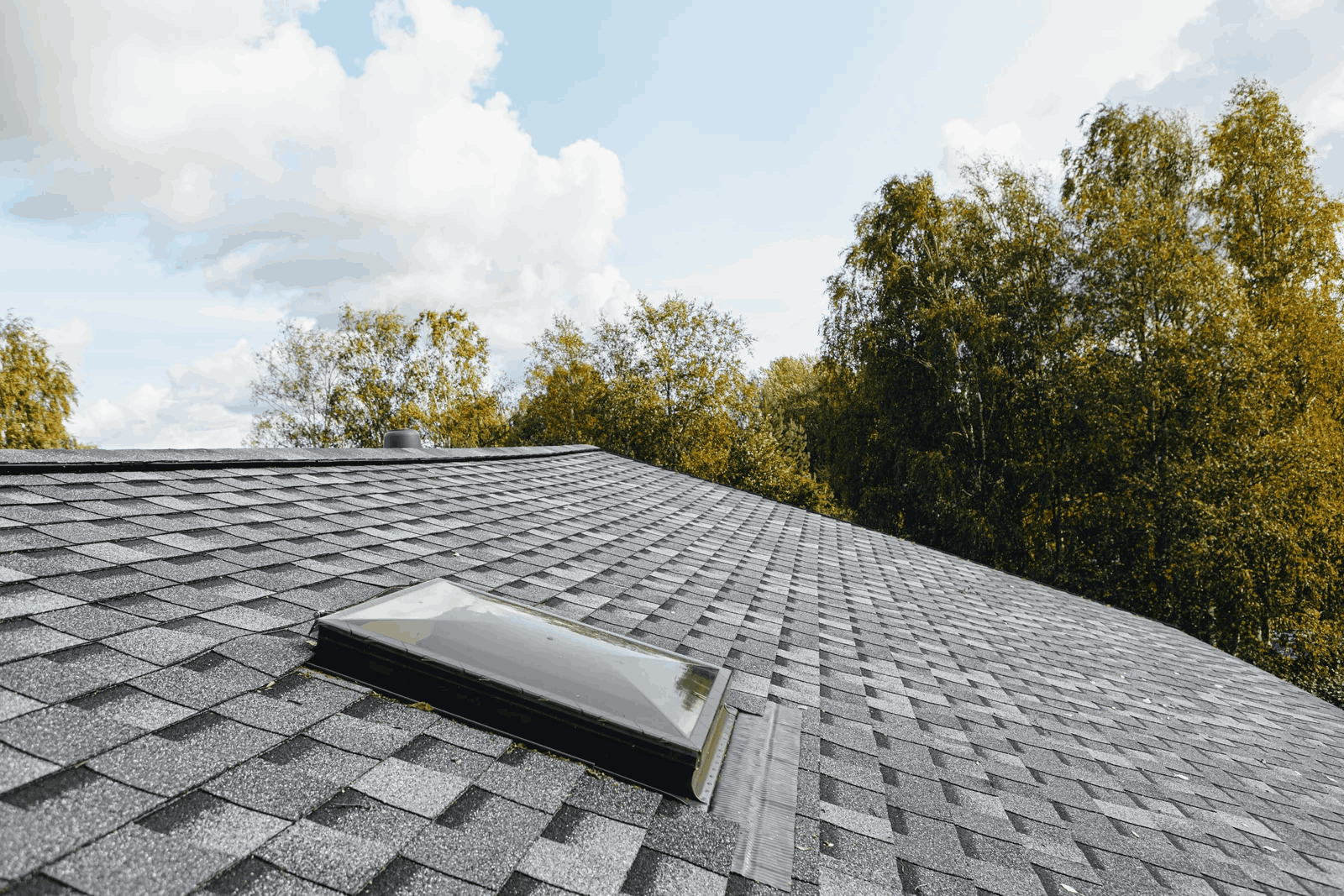
Flashing is the thin metal trim around chimneys, skylights, vents, and valleys, and it is the spot where roofs fail most often. Look for rust, cracks, gaps, or flashing that has pulled away from the wall. The old roofing tar used to seal those joints turns brittle and gives out around year 10.
If the flashing is shot and the shingles around it are getting up there in age too, replacing the whole roof beats patching it piece by piece.
7. Your Roof Is 20 Years or Older
Most architectural asphalt shingles in Maryland last 18 to 22 years. Three tab shingles give you even less. If your roof is past the 20 year mark and showing any of the signs above, you are on borrowed time.
Age matters to your insurance company too. A lot of carriers now restrict coverage, switch to actual cash value payouts, or just refuse to renew on roofs older than 15 to 20 years. Dig out your closing documents to check the date, or ask a neighbor who has been on the block longer than you have.
How to Inspect Your Own Roof in 10 Minutes
You can catch most of these signs from the ground, no ladder required. Here is the quick walk through we tell Frederick homeowners to run.
- Walk the perimeter: Circle the house and look up at every slope for curling, missing, or discolored shingles.
- Check the gutters: Look for that granule buildup and any sagging or separated sections.
- Sight the ridgeline: Stand across the street and make sure the ridge runs straight, with no dips or waves.
- Inspect the attic: On a sunny day, watch for daylight, water stains, damp insulation, or a musty smell.
- Photograph problem areas: Date stamped photos help with an insurance claim and give your roofer a head start.
If two or more of these checks raise a red flag, book a professional inspection before the next storm rolls through.
Repair or Replace? A Quick Comparison
| Factor | Repair | Replace |
|---|---|---|
| Roof age | Under 12 years | Over 15 years |
| Damage scope | One slope or leak | Multiple slopes or signs |
| Cost horizon | Lower now, recurring | Higher now, 20 plus years |
| Insurance fit | Minor claims | Storm or hail claims |
Bottom line: A targeted repair makes sense on a younger roof with one isolated problem. But once a roof is past 15 years and showing several of the seven signs, replacement almost always costs less over time than a string of patches that keep failing. For a full price breakdown, see our guide on how much a new roof costs in Maryland.
Get a Free Roof Inspection in Frederick County
Not sure where your roof stands? We do free, no pressure roof inspections across Frederick, Urbana, Mount Airy, Walkersville, and the towns around them. Our crew documents every finding with photos, so you walk away with a clear picture of what the roof actually needs.
Learn more about our roofing services, grab a free instant quote in about 60 seconds, or contact us today to set up your inspection. If the roof has another five good years in it, we will tell you. If it does not, we will tell you that too.
Frequently Asked Questions
How long does an asphalt shingle roof last in Maryland?
Most architectural asphalt shingle roofs in Maryland last 18 to 22 years, and three tab shingles last closer to 15. Maryland freeze and thaw cycles, humidity, and summer heat tend to push roofs toward the shorter end of the range, especially when attic ventilation is poor.
Can I replace just part of my roof?
You can repair a single slope or section, but partial replacement often creates a visible color mismatch and leaves the older sections to fail next. If your roof is over 15 years old and shows damage on more than one slope, a full replacement is usually the better long term value.
Does a new roof lower my home insurance?
It often helps. Many insurers offer better terms for roofs under 10 years old and restrict coverage or payouts on roofs older than 15 to 20 years. A new, code compliant roof can make a policy easier to renew and may reduce your premium with some carriers.
How much does a new roof cost in Frederick, MD?
A typical asphalt shingle replacement in Frederick County runs about $8,000 to $18,000 depending on roof size, pitch, layers to remove, and material grade. You can see a full breakdown in our Maryland roof cost guide.
Is a roof inspection really free?
Yes. EZ Home Services provides free, no obligation roof inspections across Frederick County and Northern Virginia. We document findings with photos and give you an honest assessment, including telling you when a roof still has years of life left.
Part of the EZ Home Services crew in Frederick, MD, on Maryland and Northern Virginia roofs since 2012. Have a question about your home? Reach out anytime.
Meet the team