How to Choose a Roofing Contractor: 10 Questions to Ask
A bad roofer costs you twice: once for their work and once to fix it. These 10 questions filter out the ones who will disappear after the check clears.

To choose a roofing contractor in Maryland, confirm an active Maryland Home Improvement Commission (MHIC) license, proof of general liability and workers compensation insurance, manufacturer certification, and a written warranty before you sign anything. Then ask for three recent local references and a detailed line item estimate. A real contractor answers every question without flinching. Anyone who dodges, or leans on you to sign right now, is telling you exactly what you need to know.
A bad roofer costs you twice. Once for the work, and again to fix the work. The Maryland Attorney General’s Consumer Protection Division receives thousands of home improvement complaints every year, and the Better Business Bureau keeps ranking home improvement and contractor scams among the categories that generate the most consumer reports nationwide. Roofing lands near the top because the work is expensive, weather creates urgency, and most homeowners only buy a roof once or twice in a lifetime. Storm chasers, fly-by-night outfits, and the guys who take a deposit and vanish all count on that inexperience.
Here’s the good part. You can screen out most of the bad ones with a short list of questions. Ask them before you sign anything. Below you’ll find what a strong answer sounds like, what a red flag answer sounds like, and the local stuff that matters here in Frederick County and Northern Virginia.
Credentials to Verify Before You Sign
Treat this as a checklist, and check each item yourself instead of taking the salesperson’s word for it. Every credential here is something a homeowner in Frederick, Urbana, or Mount Airy can confirm in a few minutes online or with a phone call.
| Credential | How to verify | Green flag | Red flag |
|---|---|---|---|
| MHIC license | Search the MHIC licensee database at the Maryland DLLR site | Active number on truck, estimate, and website | No number, expired, or belongs to someone else |
| General liability insurance | Request a Certificate of Insurance, call the agent | At least $1 million, your name listed | Photocopy with a scratched out date |
| Workers compensation | Ask for proof on the same certificate | Active policy covering all crew | ”My guys are subcontractors” |
| Manufacturer certification | Check GAF, Owens Corning, or CertainTeed contractor locators | Listed and certified to offer enhanced warranties | Claims certification but is not listed |
| Written warranty | Read the contract before signing | 5 to 10 years workmanship in writing | Verbal promise, nothing on paper |
The 10 Questions to Ask a Roofing Contractor
1. Are You Licensed in Maryland?
Every residential roofing contractor in Maryland needs an MHIC license, and anyone selling door to door needs an MHIC salesperson license on top of that. The number should show up on the truck, the estimate, the business card, and the website. You can look it up in about 30 seconds in the MHIC licensee database.
A good answer hands you the license number before you even finish the question. A red flag answer is “we’re licensed and insured, don’t worry about it” with no number you can actually check. After a hailstorm, out of state crews often work with no MHIC license at all. That’s illegal in Maryland, and it kills your recourse through the state Guaranty Fund.
2. What Insurance Do You Carry?
Two policies matter here. General liability of at least $1 million protects your home if the crew damages it. Workers compensation protects you if a roofer falls and then tries to come after your homeowners policy.
A good answer sounds like “I’ll have my agent email you a Certificate of Insurance with your name on it today.” A red flag answer is a wrinkled photocopy, or a claim that the whole crew is “independent subcontractors” who carry their own coverage. The Insurance Information Institute notes that uninsured contractor work can leave a homeowner personally exposed if someone gets hurt on the property. Call the agent listed on the certificate and confirm the policy is active. It takes five minutes and it’s worth it.
3. Do You Have Manufacturer Certifications?
Shingle manufacturers like GAF, Owens Corning, and CertainTeed certify contractors who meet their training, quality, and reputation standards. GAF reports that its Master Elite designation is held by roughly the top few percent of roofing contractors in North America. Certification matters because it usually unlocks the enhanced system warranties a non-certified installer just can’t offer.
A good answer names the certification and pulls up the contractor’s listing in the manufacturer locator right there. A red flag answer promises a “lifetime warranty” but can’t point to any certification behind it. A 50 year warranty is only worth something if the installer was certified to register it in the first place.
4. Can I See a Detailed Written Estimate?
A real estimate lists everything: shingle brand and model, underlayment, ice and water shield coverage, drip edge, ridge vent, flashing, tear off, disposal, decking allowance, permit, and labor.
A good answer is a multi-page line item proposal you can lay next to other bids and compare line for line. A red flag answer is a one page quote with a single lump sum and a signature line waiting at the bottom. Lump sum quotes let a contractor quietly skip the underlayment, reuse old flashing, or nail right over a soft deck. Frederick County requires a building permit for most full roof replacements, so the permit should show up as its own line item, not as a surprise later.
5. What Does Your Warranty Actually Cover?
Warranties have two parts. The manufacturer warranty covers the shingle itself, usually 25 to 50 years. The workmanship warranty covers the installation, and that’s where contractors are all over the map.
A good answer offers at least 5 years of workmanship coverage in writing, and the strongest Maryland contractors go to 10 years or more. A red flag answer is a vague verbal promise with nothing on the contract. Ask what happens if the company goes out of business. Some manufacturer enhanced warranties transfer to a new owner and outlast the contractor closing up shop. A workmanship warranty from a one truck operation usually doesn’t.
6. Can I Talk to Three Recent Local References?
Not three references from anywhere. Three from your county, from jobs finished in the last 12 months.
A good answer is a list of names and numbers in Frederick, Loudoun, or Fairfax that the contractor hands over without hesitation. A red flag answer is “all my reviews are online,” or references that turn out to be three counties away. Call them. Ask whether the crew showed up on time, whether the final price matched the estimate, whether anything surprised them, and whether they’d hire the contractor again. A contractor with no local references either just got here or rolled in after the last hailstorm.
7. How Long Will the Job Take?
A straightforward asphalt roof on a single family home takes one to two days with a full crew. Metal roofs, or steep and cut up roofs, take longer.
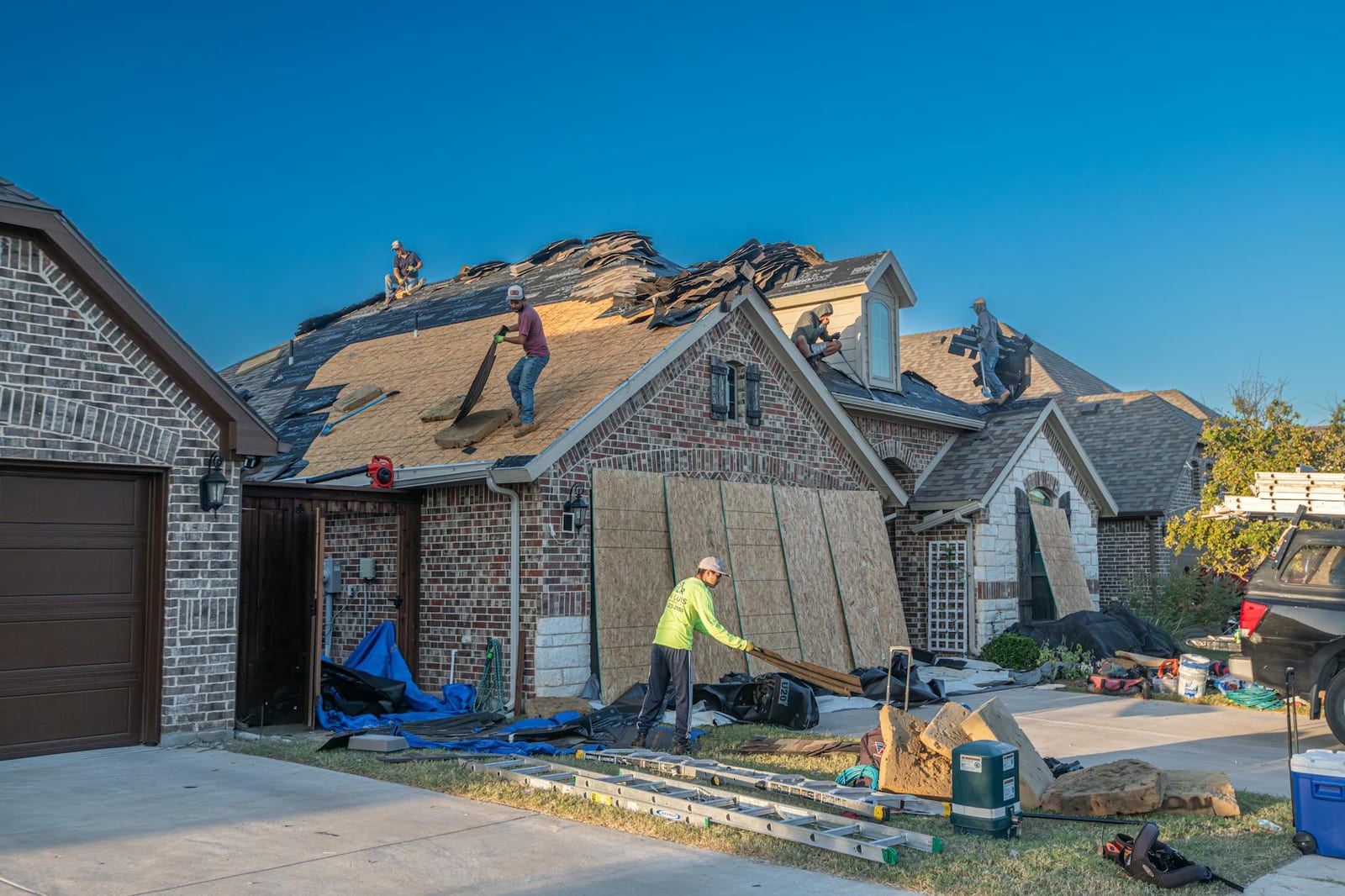
A good answer is a specific start date and a specific completion date, plus a plan for protecting your yard, driveway, AC condenser, and landscaping with tarps and plywood. A red flag answer is “a few days, maybe a week.” In our experience that usually means your job is filler between bigger ones and the crew is overbooked.
8. What Is the Payment Schedule?
Maryland law limits the deposit a home improvement contractor can collect before work begins, and reputable roofers stay well under any aggressive number. A fair, common structure is a modest deposit, a progress payment when the materials show up, and the balance only after your final walkthrough.
A good answer is a written schedule tied to milestones you can actually see. A red flag answer is a demand for half or more of the total in cash up front, before a single shingle arrives. The FTC’s guidance on home improvement is blunt: never pay in full before the work is done, and watch out for anyone who only takes cash or pushes you to finance through them on the spot.
9. Are You A+ Rated With the BBB?
The Better Business Bureau isn’t perfect, but it’s a useful screen. Look up the contractor at bbb.org and check the letter grade, the number of complaints, and how those complaints got resolved.
A good answer is a solid grade with a handful of complaints handled quickly across hundreds of jobs. A red flag answer is a wall of unresolved complaints, or no BBB profile at all paired with no MHIC history. Cross check Google reviews and the MHIC complaint record too. The pattern across complaints tells you far more than any single angry review does.
10. What Happens If Weather Delays the Job?
Maryland weather is hard to predict. Thunderstorms, hail, and high winds can roll in fast. A professional contractor has a written rain plan that spells out how they’ll dry in an open roof, what materials they’ll use, and who’s responsible if water gets in during a delay.
A good answer comes out ready, because pros plan for this on every job. A red flag answer is a blank stare. Ask the question out loud and watch how they react.
How to Vet a Roofer Before You Sign
Run through this in order. Each step is something you can knock out in an afternoon, and skipping any one of them is how homeowners end up paying twice.
- Confirm the MHIC license. Search the licensee number in the Maryland MHIC database and check that the name matches the company on your estimate.
- Verify insurance directly. Have the contractor’s agent email a Certificate of Insurance with your name on it, then call the agent to confirm the liability and workers comp policies are active.
- Check the manufacturer locator. Look the company up in the GAF, Owens Corning, or CertainTeed contractor locator to back up any certification claim.
- Pull the BBB and review history. Read the BBB grade, Google reviews, and MHIC complaint record together and look for patterns, not single comments.
- Call three recent local references. Pick jobs in your county finished within the last year and ask the direct questions above.
- Compare line item estimates, not lump sums. Get at least two detailed written bids and compare them line by line.
- Read the warranty and payment terms before signing. Confirm the workmanship coverage in years, a milestone based payment schedule, and a reasonable deposit, all in writing.
Get through all seven steps and you’ve done more homework than most homeowners ever do, and you’ve weeded out nearly every bad actor.
Local Context: Hiring a Roofer in Frederick County and Northern Virginia
Maryland and Virginia license contractors differently, and that matters once your contractor crosses the river. In Maryland, the MHIC regulates home improvement work and runs the Guaranty Fund, which can reimburse homeowners for certain losses caused by a licensed contractor. In Virginia, contractors are licensed through the Department of Professional and Occupational Regulation (DPOR), so a roofer working in Loudoun or Fairfax should hold the right Virginia class of license, not just an MHIC number.
After a hailstorm in places like Urbana, Mount Airy, or Walkersville, out of state crews flood the area chasing insurance work. A lot of them are gone long before the workmanship warranty would ever come due. A local company with a permanent address, a verifiable MHIC license, and references on your own street is the best protection against that. If a storm did damage your roof, our public adjuster resources walk through how to handle the insurance side without getting steered into a bad contract.
Hiring Is the First Decision
The shingle brand, the warranty, and the price all matter. But the biggest thing that decides how your roof actually performs is who puts it on. A mid-range shingle installed by a careful, certified crew will beat a premium shingle installed by a rushed one. We see it on every job.
Learn more about our team, our MHIC license, and our manufacturer certifications, or read about our full range of roofing services across Frederick County and Northern Virginia.
Frequently Asked Questions
Do roofing contractors in Maryland need a license?
Yes. Every residential roofing contractor in Maryland must hold an active Maryland Home Improvement Commission (MHIC) license, and door to door salespeople need an MHIC salesperson license. You can verify any number for free in the MHIC licensee database. Hiring an unlicensed contractor is illegal and voids your access to the state Guaranty Fund if the work goes wrong.
How much deposit should a roofer ask for in Maryland?
A fair structure is a modest deposit up front, a progress payment when materials are delivered, and the balance only after your final walkthrough. Maryland law limits how much a home improvement contractor can collect before starting, and the FTC advises never paying in full before the job is finished. A demand for half or more in cash up front is a red flag.
What insurance should a roofing contractor carry?
A roofer should carry general liability coverage of at least $1 million and active workers compensation for the entire crew. Ask for a Certificate of Insurance with your name listed, then call the agent to confirm both policies are active. Without workers comp, an injured roofer could come after your homeowners policy.
How do I check if a roofer is legitimate?
Verify the MHIC license in the state database, confirm insurance directly with the agent, check the BBB grade and complaint history, look the company up in the shingle manufacturer’s certified contractor locator, and call three recent references in your county. A legitimate contractor passes all five checks without hesitation.
What questions should I ask a roofer before signing a contract?
Ask about MHIC licensing, liability and workers compensation insurance, manufacturer certification, the workmanship warranty in years, the payment schedule, recent local references, the project timeline, and the written rain plan. Get a detailed line item estimate rather than a single lump sum so you can compare bids fairly.
Still gathering bids? Get a free instant quote in about 60 seconds, look over our roofing services across Frederick County and Northern Virginia, or contact us to set up a free, no pressure inspection this week. We’ll answer every one of these 10 questions in person, in writing, before you ever sign a thing.
Part of the EZ Home Services crew in Frederick, MD, on Maryland and Northern Virginia roofs since 2012. Have a question about your home? Reach out anytime.
Meet the team